
Heating That Works When You Need It
Furnace Installation in Panama City for homes replacing outdated single-stage systems or adding winter heating capacity
Comfort Solutions Heating & Air, LLC installs gas furnaces across Panama City and Lynn Haven with load calculation-backed sizing, ductwork static pressure verification, and AFUE rating selection that matches your home's actual heating demand. Older homes built between the 1960s and 1990s often run inefficient single-stage furnaces that cycle constantly during cooler months, driving up utility costs without maintaining consistent indoor temperature. Proper furnace sizing based on measured heat load prevents short-cycling and cold spots that result from guesswork installations.
Furnace installation begins with calculating your home's BTU requirements based on square footage, insulation levels, and window orientation, then sizing the furnace to match those needs rather than defaulting to the largest unit that fits the space. Gas line pressure is tested and verified to code standards before connecting the furnace, and exhaust venting is configured to safely remove combustion gases without backdraft risk. Indoor blower static pressure is measured after installation to confirm the ductwork can handle airflow without excessive resistance that reduces efficiency.
Request an on-site evaluation to determine the correct furnace size and AFUE rating for your Panama City home.
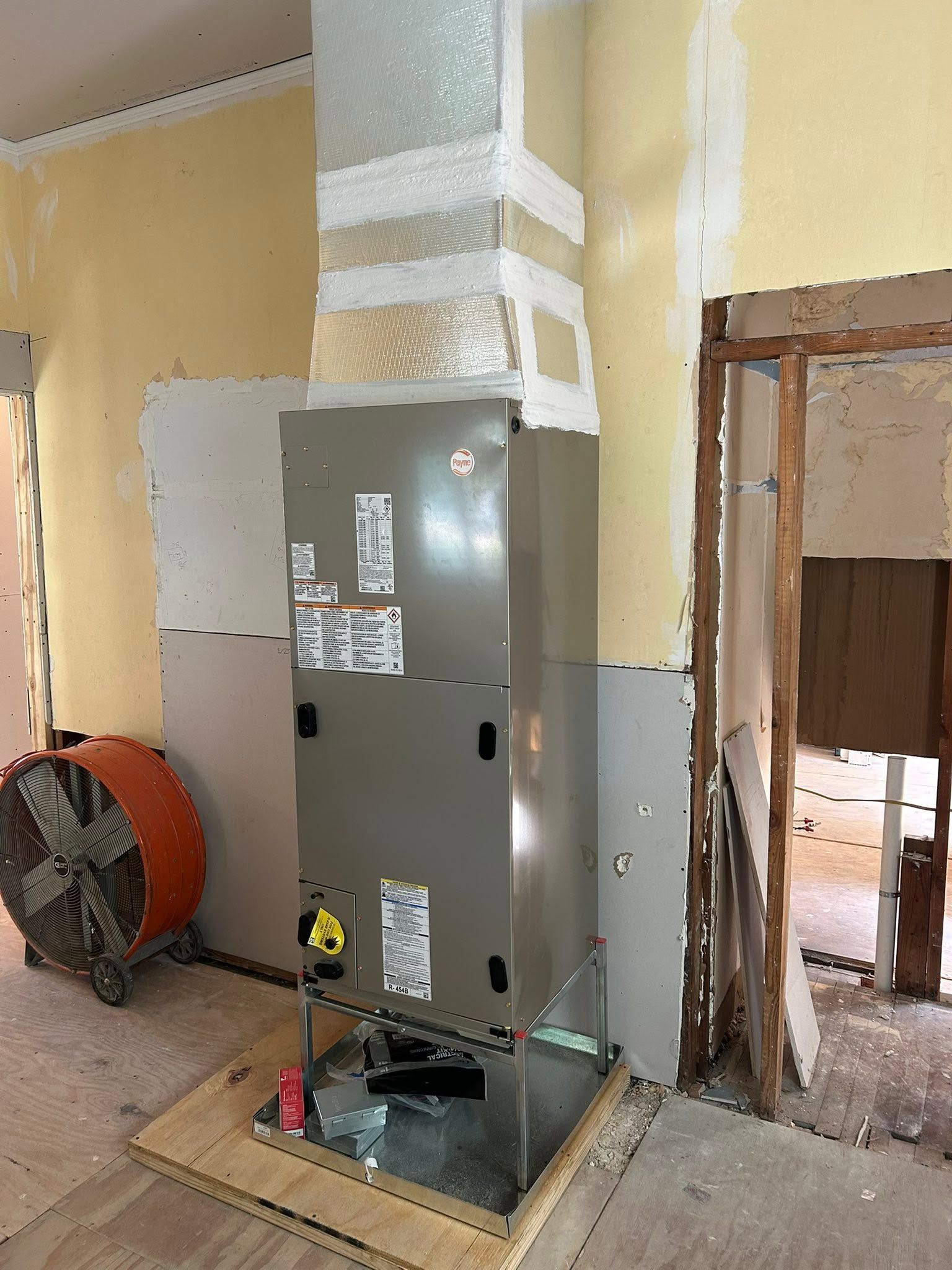
What Correct Furnace Sizing Prevents
Load calculation determines the precise BTU output your home requires during the coldest local temperatures, which prevents installing an oversized furnace that cycles on and off every few minutes instead of running steady heating cycles. Gas line configuration and pressure testing confirm your home's gas supply can deliver the fuel volume the furnace needs without pressure drop during operation. Exhaust venting is routed and sealed to prevent carbon monoxide intrusion, and the heat exchanger integrity is verified before the first firing to confirm no cracks or manufacturing defects exist.
After installation, you'll notice consistent room-to-room temperatures without cold zones near exterior walls, quieter operation without the loud startup noise of oversized blowers, and lower monthly heating costs because the furnace runs longer cycles at lower burner intensity instead of short blasts at full output. The thermostat holds setpoint without constant overshoot and recovery swings, and airflow from vents feels steady rather than intermittent.
Furnace installation includes all gas line connections, condensate drainage if installing a condensing unit, and thermostat wiring adjustments if upgrading from older mercury-switch controls. The service does not include ductwork replacement or modification unless static pressure testing reveals restrictions that prevent proper airflow, which is identified before finalizing the installation quote.
What Property Owners Usually Ask
Understanding the installation process helps you evaluate quotes and recognize what proper furnace installation involves in Panama City homes.
What determines the correct furnace size for my home?
Load calculation measures your home's heat loss based on insulation, window area, and construction type, then matches furnace output to that calculated demand rather than using square footage rules of thumb that often result in oversized equipment.
How long does furnace installation take in Panama City?
Most residential gas furnace installations require four to six hours once the unit arrives, including gas line testing, venting installation, static pressure verification, and safety checks before activation.
What does AFUE rating mean for my heating costs?
Annual Fuel Utilization Efficiency measures how much of the gas burned converts to usable heat; a 95% AFUE furnace wastes only five cents of every dollar spent on gas, while older 80% units waste twenty cents through exhaust losses.
When should I replace a furnace instead of repairing it?
If the heat exchanger shows cracks, the blower motor has failed multiple times, or the furnace is more than fifteen years old with declining efficiency, replacement prevents repeated service calls and safety risks from failing components.
What happens if the gas line pressure is too low?
Insufficient gas pressure causes incomplete combustion, yellow flames instead of blue, soot buildup inside the heat exchanger, and carbon monoxide production, which is why pressure testing happens before any furnace connects to your home's gas supply.
Comfort Solutions Heating & Air, LLC stocks OEM-spec replacement parts and performs load calculations as standard procedure, not optional upsells. Schedule a furnace installation consultation to review your home's heating requirements and gas line capacity.